


🔥 2736 Copies Left
The Purple Quran Translation by Amr Abu Ayyub
Note for USA customers:
USA lead times for delivery are longer as we ship from the U.K. to our warehouse first
- Description
Note for USA customers:
USA lead times for delivery are longer as we ship from the U.K. to our warehouse first
You have not experienced a Qur'an translation like this yet!
Heres why we think you'll love our Purple Quran Translation.
📖 Clear, simple English translation
✨ Guided dua cues as you read
💜 Visual reminders for protection, forgiveness, and guidance
🌙 Calm, easy to read layout
🤍 Helps you slow down and reflect
🎁 Beautiful purple cover, perfect for gifting
_______________________________________
This Qur’an is intended to help you about reflecting deeply, and turn every reading session into sincere dua exercise.
______________________________
Have a read of a page to understand just how easy it is to read:


Note for USA customers:
USA lead times for delivery are longer as we ship from the U.K. to our warehouse first


AUTHENTIC & TRUSTWORTHY
Rooted in classical Sunni tafsir and aligned with the Qur’an and Sunnah. No modern reinterpretations.

UNIQUE DUA PROMPTS
Gentle dua prompts placed throughout the text. Designed to turn reading into personal reflection.

CONTEXT THAT HELPS
Clear explanations for difficult verses and historical context. Simple, helpful, and never overwhelming.
The Purple Qur’an
The Qur’an is always an amazing read, filled with good news, guidance and hope. But reading it in this English copy brings you one step closer to understanding the bigger picture.
I first heard about the Purple Qur’an through Shadee Elmasry from Safina Society on YouTube, and that was what introduced me to it.
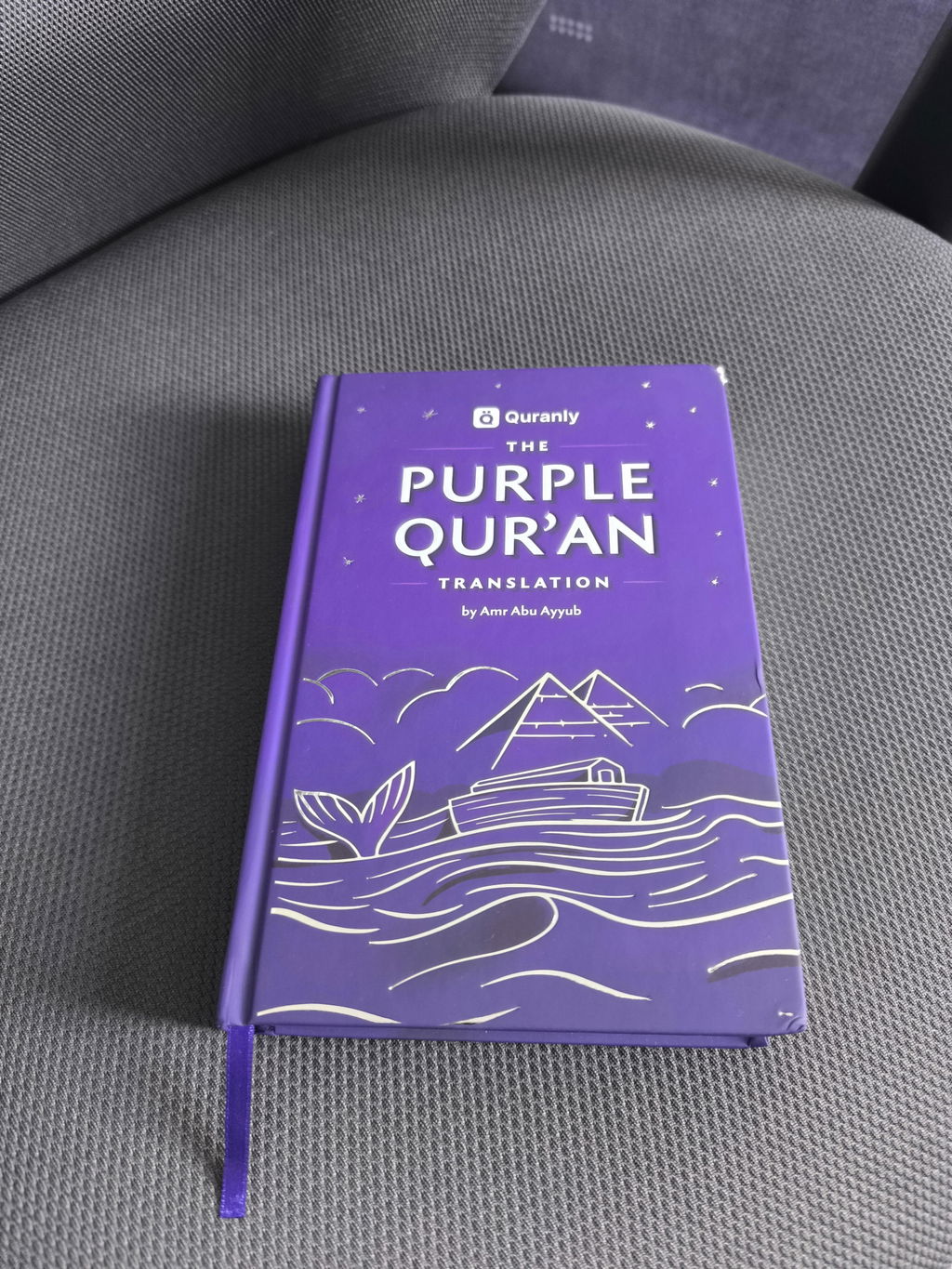
Amazing, thank you
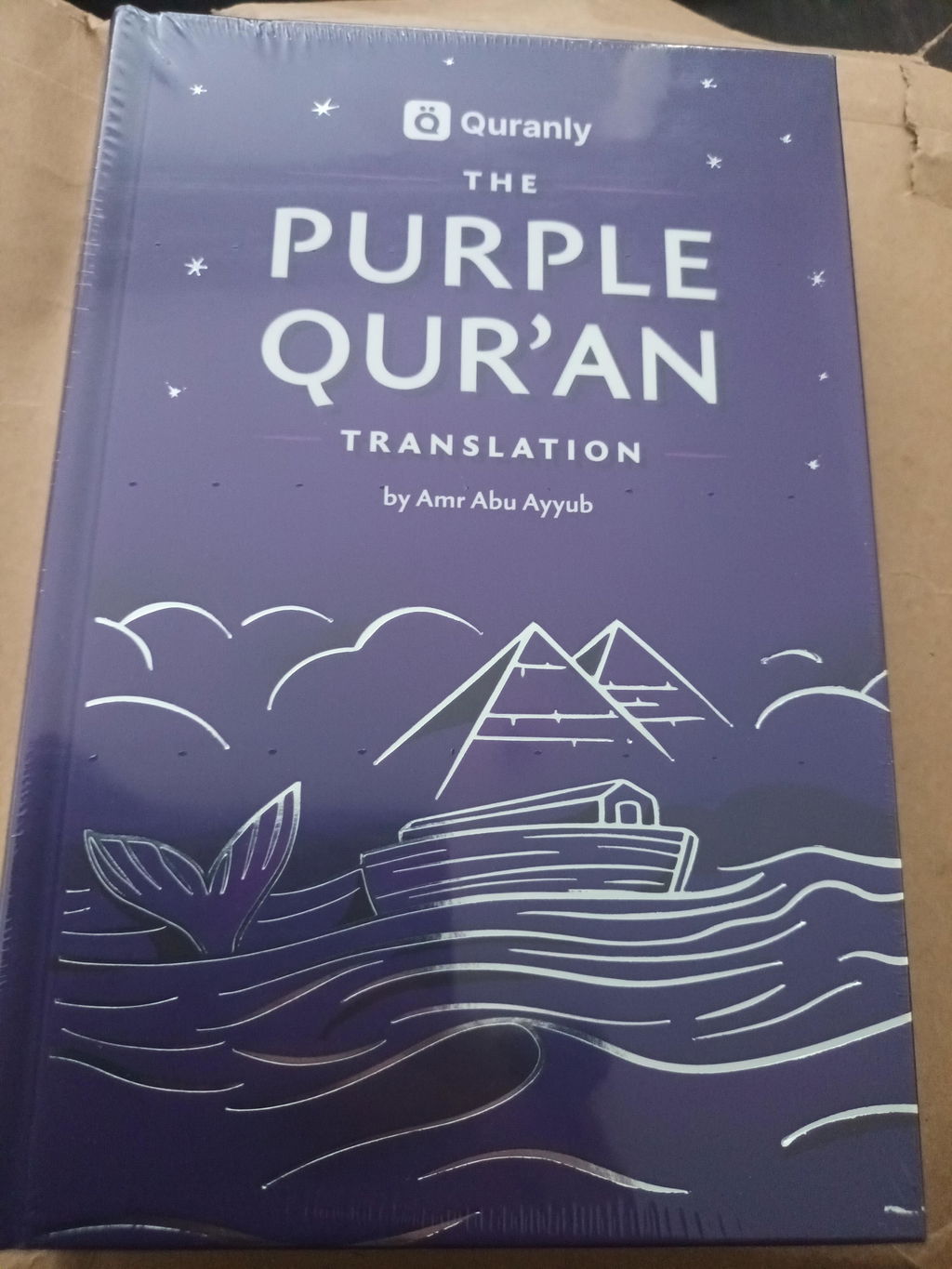
Very good translation, easy to understand and follow through. I love it. Jazaikallah Khayr
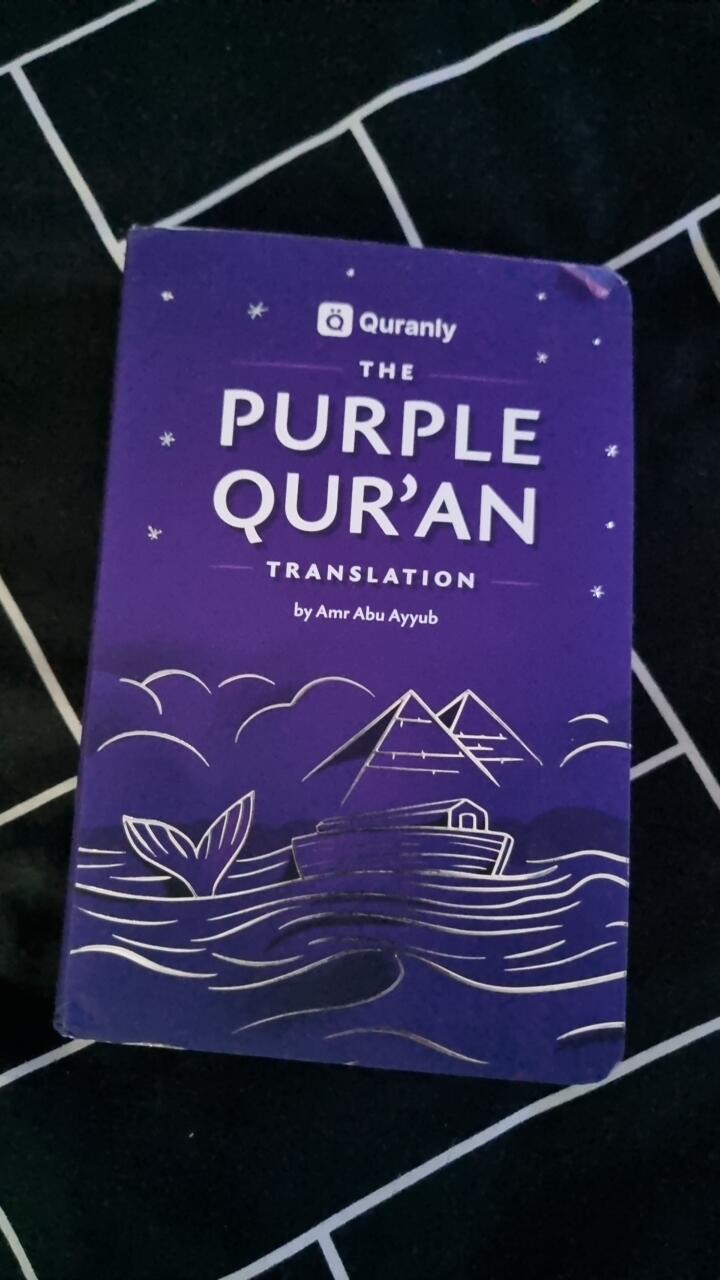
Very well put together, very simple to read, especially for new Muslims and a high-quality print. Excellent choice for new Muslims and those interested in Islaam.
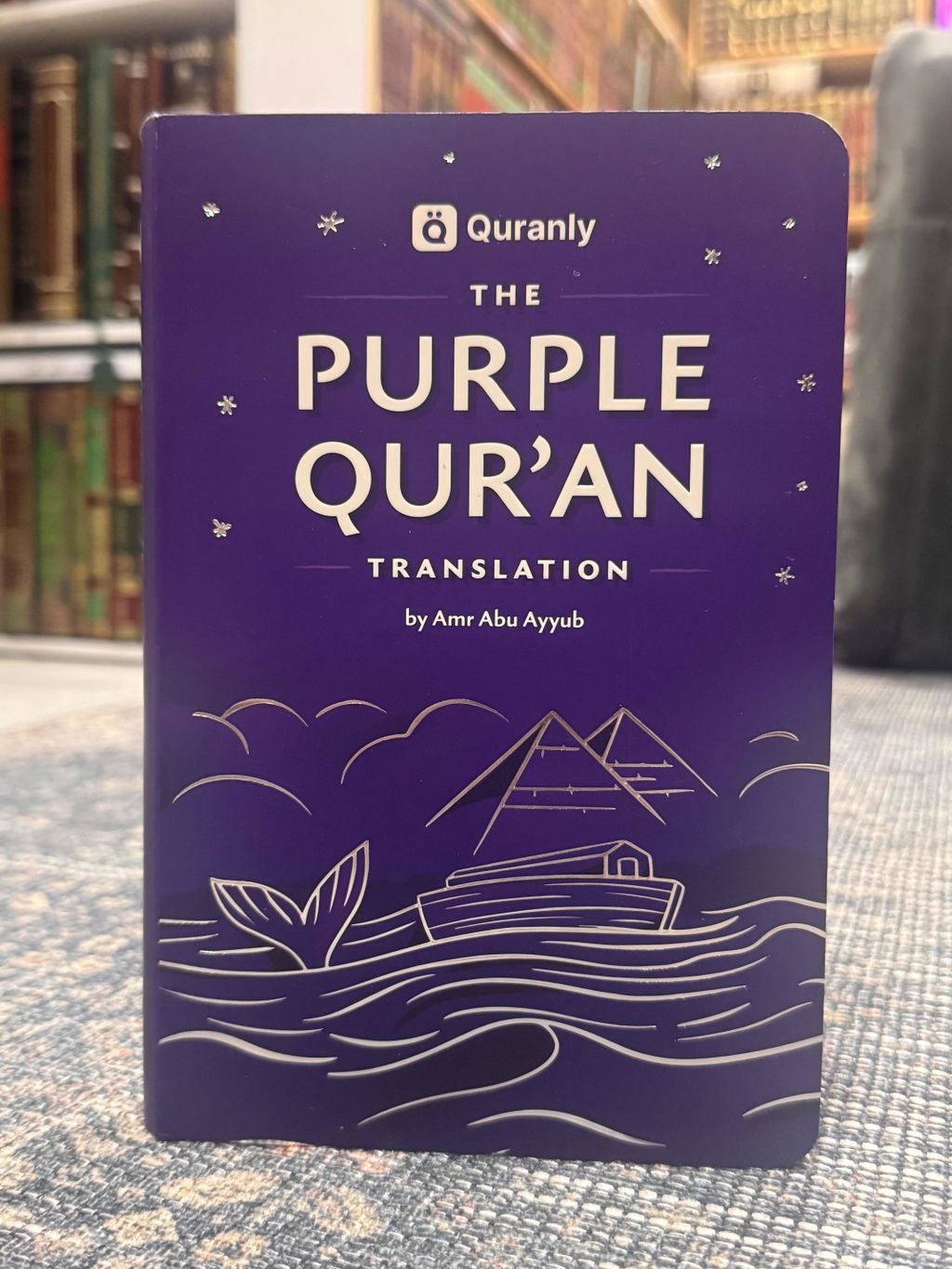
I love my Purple Quran Translation so far. It’s not only a beautiful book, it’s also one of the easiest to understand translations I’ve read by far. I love the commentary too, really helpful when certain verses need explanations for clarity.
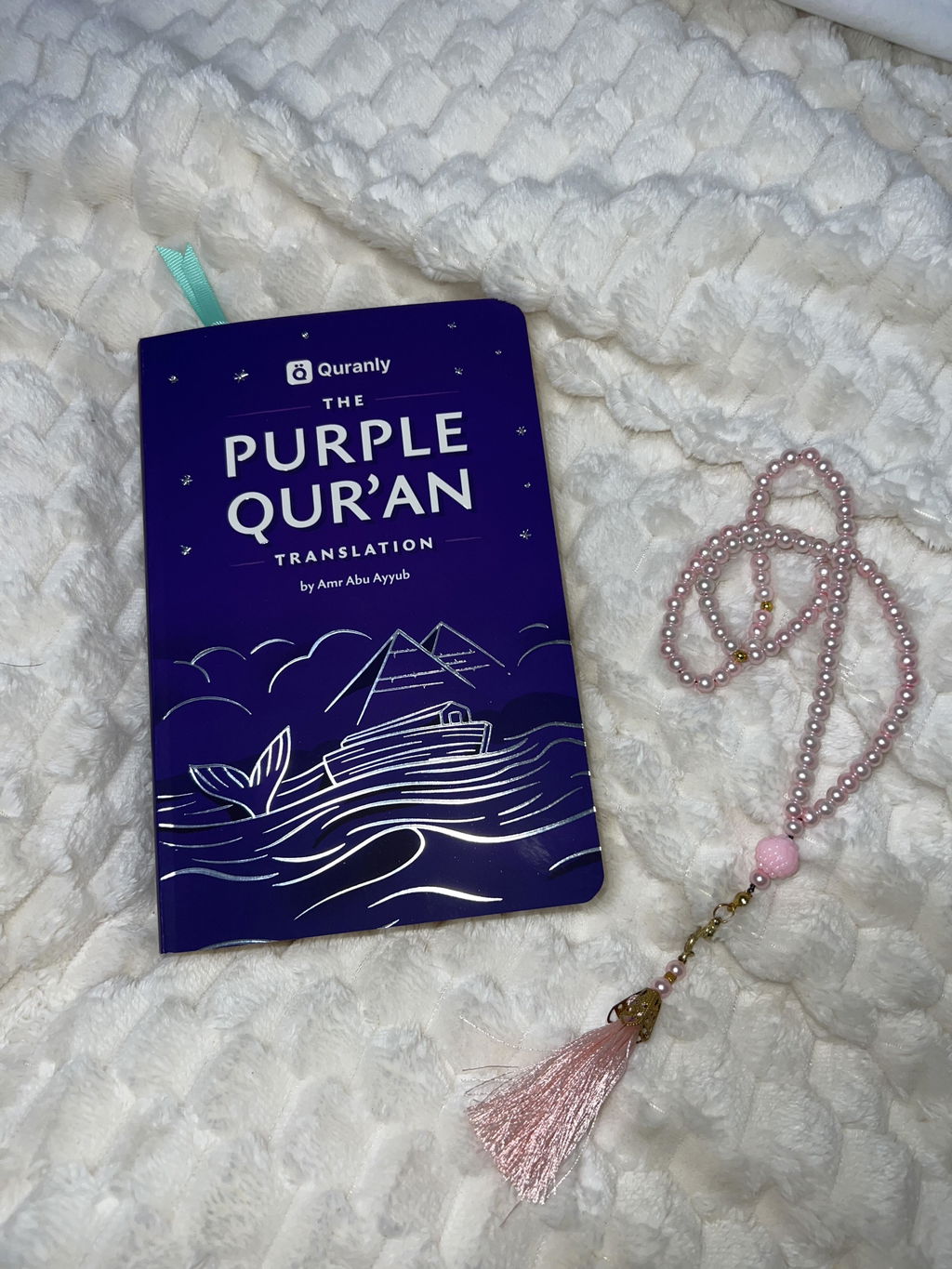
I ordered Quranly on Feb 22 and it got delivered today March 2.
This Ramadan I started reading translation of the Noble Quran to revise and better understand it. But the book I was reading it's cover front & back/title page's gold printing was coming off and my fingers would get glittery gold. Half of the cover's front & back page border design and title 'Quran' is smeared because of that gold printing coming off. As a book lover I am very meticulous about the condition of the book. I kept reading but my heart was sad because of it's appearance. Then I stumbled on instagram ad about Quranly The Purple Quran. I was ecstatic because what are the odds! My fav color is purple btw (Like literally everything I own is purple) I'm absolutely in love with it. Alhamdulillah. The text is soft on eyes. I intend to carry it with me everywhere InshaAllah 💜 May Allah make us those who understand it and act upon it Aameen. 💜
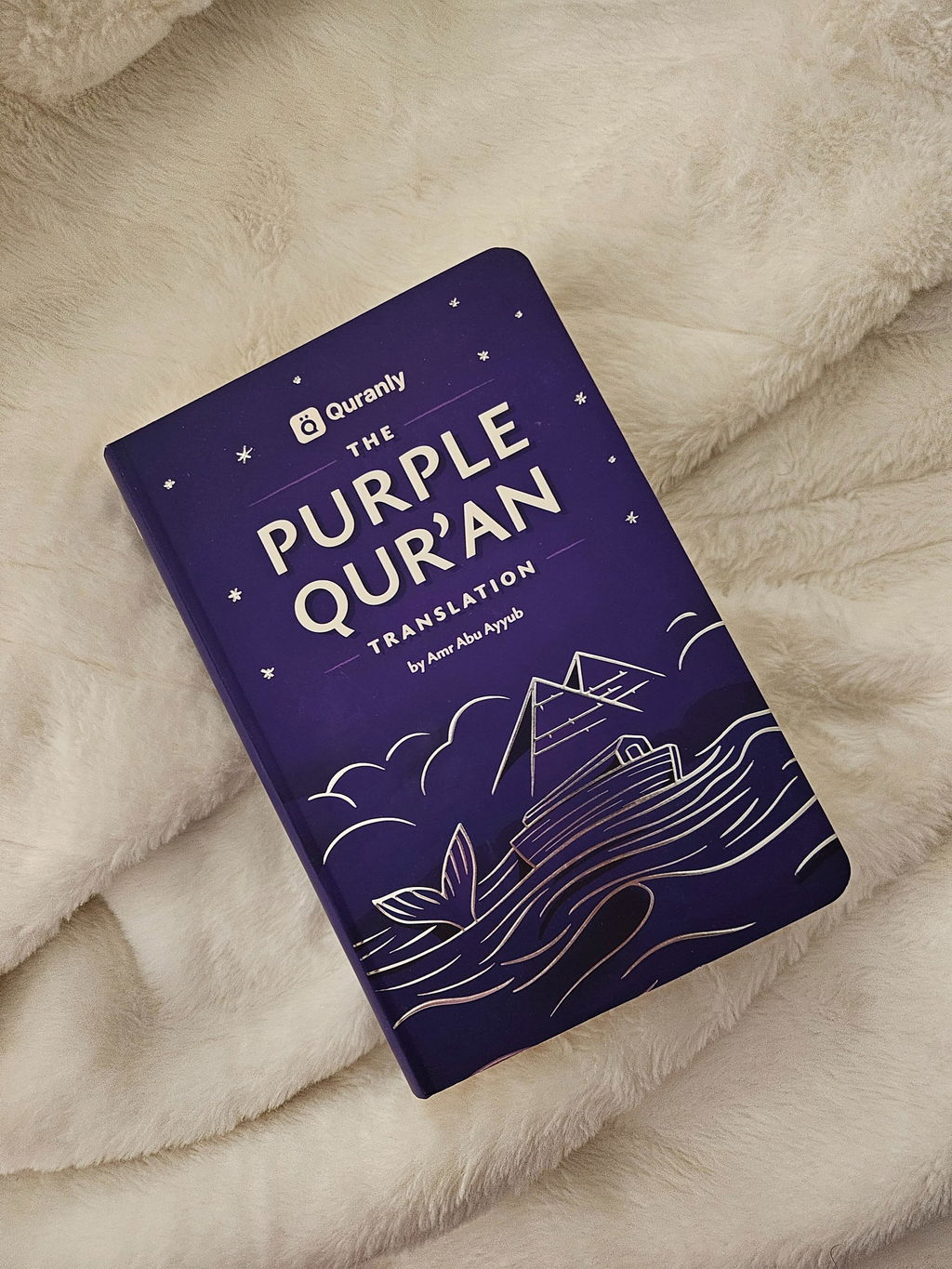
The content of the translation itself is quite fine. I would like it to be easier and faster to order books for US delivery and I would like a paperback option for the Arabic and English edition.
Nice quality. Slow shipping.
Very Good and Easy Translation. Would recommend to every believer of all stages.
It taken too long.. I wanted to give 5 star but that seem not sincere from me. So i love your guys work but if its delivered on time. I surely give 5 star. But thank you
This is a perfect tool to teach my children. We have been reading it together and understanding readily what the Qur'an says, and what Allah has commanded us. We are thoroughly enjoying the process of learning, and I have been looking for something like this for a long time, Alhumdulillah! May Allah reward everyone who worked hard to provide this for us!
Amazing Quran . Much easier to read than most others. Most perfect gift to give.
I was very impressed with the quality of the translation and the effective use of footnotes, which help clarify the meaning while remaining faithful to the original Arabic text. It is easy to read and makes an ideal gift for non-Muslim friends seeking a better understanding of Allah’s book.
very good translation, just there was a little damage on the top, but its ok, i recommend everyone to buy this product.
Alhamdhulillaahi
Great translation in modern English!!!!! 5 stars!
I love this Qur'an. It is beautiful, very well designed. The translation is great curation of Tafseer from renowned scholars. I am enjoying discovering better understanding of Allah's words with this translation. In Sha Allah I will purchase the arabic and English Purple Qur'an that just released when I am able. These are great gifts for loved ones. Jazak Allahu Khair.
Purple Quran is so beautiful and perfect translation
Allahamdullah
I'm loving it. Thanks very much. Side note, the Quranly app is a must-have as well. I'm soon going to achieve a 1-year streak, In Sha Allah! I can't thank you enough. Jazak Allah Khair!
Mashallah amazing
I cried reading this translation because I can finally fully grasp the beauty of the Quran without having to look up every other word. Jazak Allah kheir!!
Arrived after Ramadan but well worth the wait to have it in english. Thank you brother.
This is one of the best simplified translations for understanding. May Allah reward the one who did this with the best reward and place it in the scale of their good deeds until the Day of Judgment.
Very easy to read and understand
Amazing. Must Read. Really easy wording with very helpful side notes to explain things in context.
Absolutely fabulous wee book! As someone who is new to Islam, I chose the Purple Qur'an because I was looking for something that would help me on my journey to learn more about the Islamic faith! The book is beautifully made, the paper is silky soft and it feels great in your hands! I am so very happy with my Qur'an. I highly recommend this company and their beautiful Qur'an! ☪️🖤✌🏻
Excellent
Best translationI'veseen in 40 years as a rever. Well done mashallah
Very good translation

CLEAR, MODERN ENGLISH
Respectful, easy-to-read English throughout. No archaic or heavy language.

DESIGNED FOR DAILY READING
Made for regular reading, not just study.
Calm layout and thoughtful pacing.

PREMIUM PAPER QUALITY
Printed on high-quality, durable paper.
Comfortable to read and made to last daily use.
Shipping & Returns
Shipping costs are calculated at checkout based on your location and order weight. We currently do not offer free shipping on UK or international orders.
UK Orders:
- Royal Mail Tracked 24: Delivery within 1-2 working days for £3.99, as long as the order is placed by 2pm (Mon - Fri).
- Royal Mail Tracked 48: Delivery within 2-3 working days for £3.49, as long as the order is placed by 2pm (Mon - Fri).
Customs and Duties
Orders shipped outside the UK may be subject to customs fees, which the customer is responsible for. If customs fees remain unpaid and the order is returned, shipping charges will not be refunded.
Important Shipping Information
Please ensure all addresses are entered correctly to avoid delays. Orders placed before 2pm (Mon - Fri) are dispatched the same day. Shipping times may be impacted by technical issues or incomplete addresses.
International Orders
For international orders, any import duties, customs fees, or taxes imposed by the destination country are the sole responsibility of the customer.
- We recommend checking your country’s import regulations before purchasing.
- Quranly is not liable for any disputes related to customs charges.
FAQs
Why was there a need for a new translation?
I think the Tafsīr and translation literature need to keep advancing. Why did anyone write tafsīr after al-Ṭabarī and al-Zamakhsharī? After all, everyone after them touches their Tafāsīr anyway. The answer is: we need to move the field of translations forward. I did something today, and tomorrow someone else will do a better job than me. I hope PQT helps move the field forward. It’s not meant to replace earlier translations, but to offer a different balance that many readers are still looking for.
Which translations do I appreciate more, after this project?
Arberry and Mf. Taqi Usmani, both for different reasons.
Did any Ahl al-ʿIlm review the translation?
The entire translation was reviewed by multiple advanced students of knowledge, and dare I say, scholars and shaykhs. Other mashāykh only reviewed parts of it, and others yet were consulted on difficult āyāt and passages (more to come on that later).
What makes the PQT different?
Most English translations either sound very literal but miss the force of the Arabic, or read smoothly but flatten the meaning. My translation tries to avoid both problems. It stays close to the structure and wording of the Arabic, but it also carries over what the Arabic is doing, by attempting to show emphasis, certainty, and flow. Instead of copying the shape of the Arabic sentence by sentence, I focus on making sure the meaning, tone, and intent land in English the way they do in Arabic.
What style of translation is the PQT?
It is best described as meaning-literal. It is not word-for-word in a mechanical sense, and it is not idiomatic or meant to paraphrase. The goal is to translate the function of the Arabic rather than just the surface wording. When the Arabic is ambiguous, the English remains ambiguous. When the Arabic is emphatic, the English is emphatic (e.g., I do not smooth over repetition. See: 5:115). In that sense, it is literal to meaning and intent rather than to appearance.
What sources does this translation rely on?
Ibn ʿAṭiyyah is the backbone of this translation. I treat him as the starting point for meaning and grammar. When Ibn ʿAṭiyyah leaves the disagreement open, I look to Abū al-Suʿūd, Ibn ʿĀshūr, and al-Ṭabarī to weigh the strongest option. Over time, I really fell in love with, and came to rely on, Abū al-Suʿūd for tarjīḥ, and he ended up shaping many of the final choices, with Tabarī and Ibn ʿĀshūr kept in mind as well. Roughly speaking, about 70% of the translation follows Ibn ʿAṭiyyah, around 20% Abū al-Suʿūd, and the remaining 10% draws from Ibn ʿĀshūr, al-Wāḥidī, and al-Ṭabarī.
Who is this translation for?
I believe the translation is clear enough to be good enough for non-Muslims and Muslims alike, no matter their level of reading. The footnotes add some details that might be overkill in instances, but that is just my style in how I translate. Those who’ve read my translation of al-Madkhal by ibn Badrān can testify to the fact that I simply cannot translate a text without adding clarifying footnotes. However, after acknowledging that, it’s for people who want to slow down and actually engage the Qur’ān, not just skim it.
What is with the name?
This project was sponsored and published by the very popular Quranly App. It is a great tool for helping build habits when reading the Qur’ān. Their brand colour is purple, and hence: the Purple Qur’ān Translation. It’s not that deep.